|
|
AS early autumn apples ripen in the orchards of Britain consider this strange fruit: a hippy singing songs of praise to Stalin and an ex-Stalinist writing an anti-CND article for Readers Digest.
The hippy is Robert Wyatt, ex-Soft Machine, Matching Mole and several solo albums including his latest Nothing Can Stop Us (Rough Trade). Issued at the beginning of the year it spent six months in New Musical Express's Alternative LP chart, and Wyatt and tracks from the LP have been cited by various pop celebs as their favourite songs/singer in NME's Portrait of The Artist as Consumer.
Wyatt is an extraordinary singer. His voice has pathos without sentimentality, deliberately singing with a 'nice boy' middle class English accent (like Colin Blumstone did with The Zombies and Paul Jones occasionally with Manfred Mann) at a time when most other singers used American intonation.
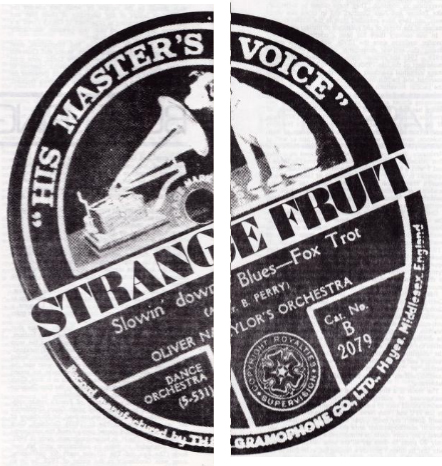
Two tracks on the LP - most of which were originally released as 45s - are outstanding: his interpretation of 'At Last I Am Free' and the haunting 'Strange Fruit' chronicling black lynching in the Deep South of the '30s.
But as for the rest ... 'Born Again Cretin' has inventive harmonys and arrangement but the lyrics! Whilst Nelson Mandela rots in prison you pricks are at liberty to read George Orwell (lyrics courtesy of Wyatt}. Or try 'Stalin Wasn't Stallin' for size! Talk about rewriting history! First done by the pinko San Francisco Golden Gate Quartet in the '40s it tells us how Stalin stood up to Hitler and called upon Britain and the US to give him a hand in crushing the fascist vermin. No mention of the 1939 Nazi-Soviet Non-Aggression Pact. Then to rub your noses really in it, black poet (and not a very good one) Peter Blackman concludes Side 2 by reciting his 'Stalingrad', a turgid litany to the battle of the same name, how the world waited with bated breath for the outcome, etc ... No mention of the fact that the rapid German advance into Russia and initial Soviet setbacks were down to Stalin's incompetence and paranoia; no mention of those returning Soviet troops in 1945 who disappeared into labour camps because they'd seen too much of the West; no mention of the fate of those White Russians forcibly repatriated, but told in Nikolai Tolstoy's Victims of Yalta (Corgi).
The only thing missing from the cover of the LP is an application form to join the British Communist Party and a free offer of an Uncle Joe Stalin poster in glorious Moscolour to hang in your kitchen.
Wyatt is a member of the CP, or was 18 months ago when he was interviewed in Melody Maker, who's deputy editor Allan Jones praised the LP to the skies (a bit unexpected that, as most of his articles recount the amount of beer and vodka he's drunk at gigs, or tell of his exploits in trying to look up Carlene Carter's skirt).
What is fascinating about the LP is how Wyatt's commitment hasn't affected his artistry. Commitment usually means earnestness walks in and art walks out (if you've ever heard the truly appalling 'The H Bomb's Thunder' by the London Youth Choir circa 1962 you'll know what I'm talking about). That his commitment includes something as perverse as praises of Stalin is frankly mind-boggling.
Nor an LP to buy, but definitely to listen to, if you get the chance. But here's the rub; someone's been buying it, thousands have been sold. Have Malcolm MacLaren's punk anarchists thrown away their bondage trousers and bought boiler suits and joined the Spartacist League?
Frank Chapple used to wear a boiler suit early in his career as an electrician although he was never in the Spartacist League. No. He was a CPer in the days when the CP was a force to be reckoned with. (Recently released Cabinet Papers show Attlee and company seriously concerned about the possibility of massive Party directed industrial disruption in 1950 linked to their 'Peace' campaign over the Korean war.)
But Frank Chapple saw the Light of Day and went from being a left-wing conspirator to being a right-wing one. His chance came when Frank Foulkes and others got caught out fiddling postal returns to secure Communist national officers within the electricians union, the ETU. When Les Cannon - who exposed Foulkes - died, Frank took over as ETU leader and has been firmly in the saddle since 1966. He's now 61 and plans to retire early because, the Sunday Times business section speculates, he saw 'Joe Gormley stay too long as head of the mineworkers, depriving a credible
right-wing successor from emerging, and so letting in the marxist Arthur Scargill.' It seems our Frank isn't going to make the same mistake. Besides being the next TUC president early retirement will perhaps also give him the time to write further articles for the Readers Digest.
I've mislaid his anti-CND article which Readers Digest have reprinted in leaflet form, but basically it boils down to a charge that the men from Moscow are helping to run the
anti-bomb movement. He claims that various people in executive authority are Communists and that they are conducting an orchestrated campaign that is pro-USSR and anti-USA. Similar charges were, of course, laid at the door of the anti-bomb campaign in the '50s and '60s.
Up to a point part of what he is saying is true in that there is an anti-USA tendency in the anti-bomb movement, and objectively the USSR can take comfort from and do use the anti-nuclear campaign for their own ends. I wouldn't be at all surprised if the USSR wasn't covertly funding various Western peace groups - without those groups realising it. The USSR would be daft not to. But Crying in The Chapple misses the point: the fact that unawares they might be partly funded by Moscow doesn't invalidate their argument, any more than I would dismiss what Frank fulminates against simply because I read it in the Readers Digest, which various brethren over the years have claimed is a CIA front. Two can play spot the bogeyman, Frank! Who cares if the Readers Digest is a CIA front! So what?
Of course there are CPers in CND, but I'd suggest to Frank that the anti-bomb movement is of a different character to its '50s counterpart. It's more suspicious and critical of the Labour Party and not half-wedded to it as it was in those days. It's prepared to be more critical of the USSR (though not critical enough) and to give its support
to the few genuine peace groups that exist behind the Iron Curtain, such as East Germany. I would also say that the post-1968 politics of personal liberation has to some extent affected its character.
There are many anti-nuclear groups that work sometimes in tandem with CND, sometimes separately, but are not part of it, doing their own thing and not accepting the word of latterday Peggy Duffs and Canon Collinses, which is perhaps one reason why the equivalent of the Committee of 100 has not emerged. It doesn't need to. Whether to break the law or not in pursuit of Direct Action is for many people not the moral dilemma that it was for many in those days. This in itself is perhaps some small advance for the anarchist worldview. Authoritarianism and hierarchy just don't go down too well in 1982, whether it's from the offices of CND or King Street.
When directives from King Street ruled Frank Chapple's life the Party was, as I've indicated, a force to be reckoned with. Today it is in decline, as it is in France and Spain too. The end of obedience to Stalin heralded in the end of obedience to the Party itself. Kruschev unwittingly pulled the plug out with his famous 20th Party Congress speech in 1956 when he admitted to fellow Communists that Comrade Stalin had somewhat overdone it. Hungary followed closely on this revelation and the European
Communist Parties were in a proper turmoil. Party members were no longer prepared to accept the Line and many resigned. Eventually individual Parties rebelled too, not being prepared to always accept the Tablets from Moscow.
Still, we shouldn't be too complacent. Chapple's right when he singles out the major threat to our freedom as coming from the Communist controlled countries, and, it has to be said, many folk who were involved in personal politics still somehow feel, when it's a toss up between the US and the USSR, that the latter is preferable and that Lenin was a good guy.
And fashions and feelings change. Who'd have predicted the Born Again Christian revival? Maybe Robert Wyatt is horribly on the ball. Maybe Stalin is next year's thing! His oriental counterpart, Mao - the world's biggest mass-murderer — happily co-existed in the minds of many of those post '68 dreamers. Strange fruit indeed. Me, I'd rather suck a banana than experience the rough end of a pineapple.
PETE CRAFTON



 His Master's Voice - Strange Fruit - Freedom - Vol:43 No 22 - 13th November 1982